
Categories
American Holidays Christmas Motorola Droid Sager Skype Ubuntu Video Windows 7

Merry Christmas 2010

Merry Christmas everyone!  And for those who do not celebrate Christmas, Season’s Greetings and Happy Holidays!

As I write this,I am watching my son play with his Stealth Flyer II Micro wireless helicopter and my daughter playing with the Leapster Explorer.  The kids had a great Christmas.  They got up about 6:30 AM, which is not too bad.  I remember getting up at 5:00 AM and trying to get my parents out of bed to open gifts Santa Claus brought.  One disappointment was the Leapster game we bought, no game cartridge was inside.  Not to happy with the LeapFrog company right now.  I wonder how my return experience at Best Buy will be?

I also have been using using Skype video to talk with my in-laws.  For some reason I had the wrong sound card set for Ubuntu which cause the internal mic not to work.  No problems, I rebooted into Windows 7 and ran Skype for our call.  After the call, I rebooted back into Ubuntu and researched the problem.  That’s when I found out I had the wrong profile.  I switched to Analog Stereo Duplex enabled me to select the internal mic.  I tested using the Droid with my account and Ubuntu with my wife’s account.  Audio and texting worked, now I’m ready for my next call.

Tonight we’ll have spiral cut ham, scalloped potatoes, and green beans for dinner.  Maybe we’ll drive around the neighborhood to see all the lights one the houses, watch some movies, and play some more games.  Either way I am enjoying my days off with the family.

UPDATE:

On December 26th I waited in line at Best Buy to return the LeapFrog game and explain the situation.  After listening to the manager tell me he will do me the favor since I bought the game at another Best Buy store, he exchanged it for me.  He made it seem like it was a huge inconvenience.  Now my daughter can enjoy the Leapster Explorer.

Categories
Home PC Linux Stuff Sager Ubuntu

Bootchart Maverick Meerkat

However, here is my latest bootchart (located on the right under Box.net plug-in titled Orinoco-maverick-20101025-.png) from my Sager notebook.

Categories
Home PC Linux Stuff LinuxMint Sager Ubuntu Windows 7

Ubuntu 10.10 on my PC

On October 10th at 10:10:10 AM, I took a screenshot of the date/time of my PC running Ubuntu 10.04 using Shutter before installing Ubuntu 10.10.  I used Vuze to download the BT files for x32 and x64 versions within 15 minutes.  Since I’ve had problems in the past with running Update to install the new OS over the old, I chose to backup my home directory with the rsync command to my external USB HDD.  I’ve read, some people had problems installing Ubuntu 10.10 over 10.04.  So I was glad I backed up and installed from scratch.

My installation went smooth.  I liked the check box to install third party apps (multimedia codeces except for the DVD player).  Because of this one feature, I can no longer tell people to install Linux Mint to get all the multimedia stuff running right after install.  Please don’t misunderstand, I like Linux Mint a lot.  I installed Linux Mint 10 RC1 as a VM on my Ubuntu system.  But that’s a post for another time.

I like the purple color theme better than the orange/brown theme of the past, but I still customized my desktop.  Using Crebs (Create Background Slideshow) I created a nice 15+ Star Trek rotating wallpaper theme.  I also created a Halloween theme too.  Plus with Ubuntu Tweak I changed the GDM wallpaper to a nice artist rendition nebula and changed the Ubuntu logo to a Star Fleet one.  I didn’t bother to change the window colors, icons and sound effects yet, I’m still looking for something that will work well and easy to install or customize.  I also found one thing that has helped me out over the years for reinstalling Ubuntu and Windows, keep a text document of favorite apps and other commands that make installation easy.  For me this includes anything that I need to run at the CLI.  After all was said and done, I had everything installed, configured and data files restored within 4 hours.  No need to go back and install an application or look for a special command that enabled the Ubuntu Menu when pressing the Super key. Its all right there.  Plus I add to this text file if i make a change or find a new application that is a must have for me.

Is this a perfect 10 for Ubuntu 10.10?  No, but it feel like 9.95.  My only grip is the mouse pad stays enabled no matter if I use a USB wired or wireless mouse.  I search several posts about this issue.  And although some people had some terrific answers, none worked for me.  I can’t disable the touchpad in the BIOS either.  With Windows 7, the touchpad can be disabled using Logitech’s application.  Kind of wish Logitech would develop their software apps for Linux.  But I can’t fault Ubuntu for this.

If you haven’t tried Ubuntu 10.10, download a Live CD and try it on your PC.  I think you will be surprised with this OS.  Now if only Battlefield Heroes would work on Ubuntu.

Categories
Geek Stuff Sager Software Virtual Machine VirtualBox Windows Vista

Resize Virtual HDD in VirtualBox

Several weeks ago I created a VM of Windows Vista with SP2. It ran great on my Sager NP8690. Unfortunately when I created the virtual hard drive I made it a 20GB drive. After all the patches were installed, I was down to about 3GB free. So I read a few posts from VirtualBox Forums about how to resize the drive. Here are the steps I used from the post:

  • Close you virtual machine, leave VirtualBox running.
  • Create a new virtual hard drive with the new size (I went with a dynamic size with a maximum size of 80GB).
  • Download Gparted-Live CD ISO file.
  • Add the Gparted-Live CD ISO file as a new virtual CD in VirtualBox.
  • Adjust your virtual machine settings to add the second larger hard drive and the Gparted-Live CD.
  • Start the VM and boot from the Gparted-Live CD file.
  • Choose all the defaults and wait for Gparted to start.
  • Select the second hard drive and set the partition to msdos.
  • Select the first hard drive, right click on the graph and select Copy.
  • Select the second hard drive, right click on the graph and select Paste.
  • This will take some time.
  • Once completed, shutdown the VM.
  • Adjust the settings for the VM by removing the old hard drive and the Gparted-LiveCD.  Add your Vista CD or ISO file.
  • Boot the VM and press any key to start from the Vista CD.
  • Select the option to Repair the OS.
  • Once it repairs, reboot the VM and do not press any keys.  Vista should boot and run a check disk of the VM.

Now when I boot into Vista, I have a 80GB hard drive with plenty of free space.

Thanks to gushy and bwh1969 for the original posts.

Categories
FaceBook Geek Stuff Home PC LinuxMint Sager Thunderbird Ubuntu Windows 7 Windows Vista Windows XP Work

Busy IT Month

Well it’s been a busy month for me at home and work.  I migrated my Sager NP8690 to Ubuntu 10.04 and created three virtual machines; Windows XP, Windows Vista, and Windows 7.  To my surprise Windows Vista SP2 is extremely stable as a VM.  I disabled UAC because I don’t like being asked “are you sure you want to do this” from my PC.  Both Windows 7 and Windows XP SP3 ran well also.  Over all I was pleased with the performance from each VM.  Of course that changed when I tried to run two VMs at the same time,  I was running out of RAM.  I think if I had 8GB installed, running two VMs would have worked fine.

However, I was never able to get get Blu-Ray running in any VMs or in Ubuntu.  This bummed me out since I wanted I watch Star Trek.  Maybe I’ll ask Santa to bring a Blu-Ray player for Christmas.  Then I was informed by my wife that she needed Windows in order to work from home.  Plus she was not too thrilled that I didn’t create a account in Ubuntu for her.  Oops!

So I backed up everything (again) and reinstalled the image I took before wiping out my hard drive.  Since I am dual booting between Windows 7 and Ubuntu 10.04, I deiced to leave Windows with a larger partition and keep all my videos there.  I can access then easily enough from Ubuntu without much hassle.  I still need to install a few application in Ubuntu (Thunderbird, Filezilla) but for the most part I am finished.

Instead of trying to use Gwibber a buddy of mine said I should look into TweetDeck.  TweetDeck requires Adobe Air to install and run.  Being Adobe has issues with x64, there were no .deb files for my OS.  I downloaded the .bin file and from a Terminal window I typed ./AdobeAIRInstaller.bin.  Now I can install TweetDeck and have access to my LinkedIn, Twitter, Facebook, and Google Buzz accounts.

At work, I was asked to test a kickstart install script for RHEL 5.3 (Red Hat Enterprise Linux) client install on a test PC.  I used a Dell Precision 370 which has a Intel P4 3.4 GHz  single core, 2GB of RAM, 80GB Sata drive, Nvidia Quadro FX 1400 card, and a DVD drive.  Installation took about 30 minutes.  I test several applications, accessing network shares, and printing to several network printers.  I still prefer Ubuntu or Linux Mint over RHEL, but it was fun to be part of a Linux project.

I also help with installing a new Dell server this week.  The job required us to install a keyboard/mouse tray, move an existing server and tape library up, install a new IP console KVM, and install the new ESX server.  Due to space limitations, we placed a LCD monitor on the side of the rack.  Because I hurt my back several day earlier I was asked not to lift anything.  So for me it was more of a learning experience.  Hopefully I will be asked to assist with other data room projects.

Right now I’m downloading openSuse 11.3 x64 on DVD.  Maybe this weekend I’ll try it out on a VM to see some of the new improvements I’ve read about.

Categories
LinuxMint Open Office Sager Ubuntu Virtual Machine VirtualBox Windows 7 Windows Vista Windows XP

Issues with VirtualBox between Ubuntu and Windows 7

My Sager NP8690 is one awesome notebook (except for the battery life).   Right now I have it configured for dual boot between Ubuntu 10.04 and Windows 7.  The only time I really use Windows 7 is to watch Blu-Ray movies and the occasional office document that down for display correctly in Open-office.  But rebooting the PC to go back and forth between the two OS’s is an inconvenience.

To resolve this issue I installed Oracle Virtualbox 3.2.4.  Currently I have one VM with Linux Mint 9 x64 which works well.  So I attempted to install Windows 7 x32 just like I did at work on an old HP D530 tower.  When the install reaches the point of Installing Updates the OS fails stating it’s unable to find the hard drive.

I searched for an answer but nothing really fixed my problem.  Then I noticed the HDD controller for my Windows 7 VM was set for AHCI with a blank check box.  Selecting the check box allows the VM to access the HDD controller directly.  Installation of Windows 7 is complete.

Everything in Windows 7 seems stable and running well minus the Aero effects.  I checked for updates and out of 21, only 3 installed.  That’s no good, time to reboot the VM and tried again.  None of the available updates would install.  I found this solution for Windows Vista and it worked on Windows 7.

And since I am setting up VMs, I decided to install my copy on Windows XP and Microsoft Vista.  Why Vista?  Because I got it for free and gives me an opportunity to learn something new.  Plus I have friends and family that run Vista and they call for help on occasion.

Unfortunately I made a small error when I installed Ubuntu 10.04.  Since I chose to dual boot, I kept the Windows partition at 2/3 total drive space.  Since I created four VMs I am down to about 7GB free on my Home partition.  If I can get my Windows 7 VM to play Blu-Ray I will copy off all VMs, backup all data files from both OSs, and then rebuild with Ubuntu 10.04 and import all data.  Looks like I’m in for a long weekend.

UPDATE:

After spending 2 hours reading posts about playing Blu-Ray in a VM, it looks like this is not possible.  I plan on moving forward with the migration since I’m out of drive space.  I read a solution in Ubuntu Forums that might work.

Categories
Home PC Sager Ubuntu

Bootchart Lucid Lynx

I’ve installed Ubuntu 10.04 LTS x64 on my Sager NP8690 notebook.  Installation was fast around 20 minutes.  I took a break to watch some TV with my children and after their show and they went to sleep, I spent the next 2 hours installing programs like Gimp, Picasa, Shutter, GParted, Cheese, Camera Monitor, Stellarium, Skype, Vuze, Dropbox, HP LaserJet 2605dn, Bootchart, configuring Empathy, Gwibber, Nvidia drivers, and other Desktop eye-candy.  Saturday I installed Thunderbird, dvdrip, some additional codecs, and restoring some files from my last backup.

I should have grabbed some screen-shots but it didn’t occur to me at the time.  However, here is my latest bootchart (located on the right under Box.net plug-in titled Rubicon-lucid-20100502-1.png) from my Sager notebook.

I will rebuild the Dell Dimension 8200 with Ubuntu 10.04 and see what the performance is compared to version 9.10.  I hope the Flash animation and games my children play at Cartoon Network will work better.

Categories
Home PC Personal Sager

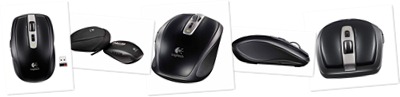
Logitech Anywhere MX Mouse

On my Dell desktop I use a Microsoft IntelliMouse Explorer.  I’ve used this mouse for years because it is reliable and comfortable.  It takes me a long time to find a mouse that I’m comfortable with.  I like to play games like Diablo1 and 2, Quake 2, 3, Arena, Jedi Knight 1 and 2, and Heroes of Might and Magic 3.  I use the mouse a lot and if it’s not comfortable, my hand will cramp and I won’t be happy using the PC.

After I purchased my Sager NP8690, I was using a Dell Bluetooth mouse.  The mouse is ergonomic and functions well, but its not comfortable.  It has too much height in the back and doesn’t feel right.

So over the last week or so I researched at Newegg.com, Staples.com, BestBuy.com, and Amazon.com several models buy Microsoft, Logitech, HP, and Kensington.  I read reviews about why one mouse was better than another, which one seems to have more problems than others, and the latest technology.

I finally decided on the Logitech Anywhere Mouse MX.  Its very comfortable and as you can see from the pictures it is very cool looking too. One of the best features is the scroll wheel.  It normally has the “click” when you scroll up or down.  When you press the mouse wheel the free wheel is running.  This is great if you have a long webpage or multi-page document.  While some have complained about missing the third mouse click, I like this new feature.  Also, when I click on the button behind the scroll wheel, You are presented with an exploded view of what programs are open.

This mouse also works great in Linux Mint 8. No drivers to install, just start Linux and your ready to roll.  In Linux Mint 8, the button behind the scroll wheel enables the Desktop Spinning Cube (as long as you have it enabled). 

I guess the most technology advanced piece is the Dark Field laser.  There is a PDF in the Box.net plug-in on the right side of this blog.  They say the table needs to be at least 4mm thick for it to work.  I might try the bedroom mirror to see how well it works.

View Logitech Anywhere Mouse MX
View Full Album
Kristen's Healthy Living Blog

Exploring ways to live a healthier life

Brave & Reckless

Reclaiming my inner badass at 50

Discover WordPress

A daily selection of the best content published on WordPress, collected for you by humans who love to read.

Drone Builders Blog

Informational Blog for Drone & Quadcopter Builders and Hobby enthusiast.